
"coffee culture growth"
3000 article(s) found

Growing Community makes dormitory Coffee fragrant
Recently, sponsored by the student growth community of Nankai University and sponsored by the Student Science and Technology Association of the College of Finance, the first phase of the series of food culture experience activities, the romantic event of coffee encounter was held. After dinner, the students walked into the shared space of 5murc dormitory for a romantic encounter with coffee. At the beginning of the activity, the lecturer introduced the growth process and production process of coffee beans. But also for

Refuse extensive growth London Bridge Coffee advocates intensive farming Market
China's coffee market has shown a strong growth momentum in recent years. Statistics show that the number of coffee shops in China has grown from more than 10,000 to more than 30,000 in the five years from 2007 to 2012. Especially in first-tier and second-tier cities, coffee drinking has been integrated with fashion and modern life, coffee consumption is increasing, and the coffee market is also expanding. This continues from many coffee shop chains

China's coffee consumption has grown at an annual rate of 20%-much higher than the global growth rate of 2%.
In 2008, Huang Wenguang chose to enter Nankeng Reclamation Coffee Manor in Zhangzhou, Fujian Province, and began to grow local coffee. In his view, coffee is squeezing into the Chinese market, which is dominated by tea culture, and if coffee is to be truly successful in China, there must be a coffee bean that is more suitable for the Chinese population, and a local coffee brand with more Chinese characteristics is needed, on the one hand, the market demand for
There are unlimited business opportunities for foreign cultures to settle in China's coffee market.
In recent years, with the rise of young and fashionable people, as well as the substantial growth of "returnees" and the number of overseas tourists, coffee culture has developed rapidly in China, and China's coffee industry has maintained a growth rate of more than 20% a year.
The 4th China Mangshi Coffee Culture Festival will be held in Mangshi, Dehong Prefecture.
China Economic News Network: (Deng Daoyong) on December 30, the reporter learned from the Yunnan Coffee Industry Association: sponsored by the China-ASEAN Coffee Cooperation Committee, the China Coffee Engineering Research Center, and the Yunnan Coffee Industry Association, the 4th China Mangshi (International) Coffee Culture Festival hosted by Dehong Hougu Coffee Co., Ltd. will be held in Mangshi, Dehong Prefecture, from January 23 to 25, 2015.

Culture methods of potted Coffee trees the growth process of coffee trees
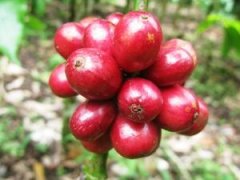
There are many coffee plants in Yunnan, and they are of good quality. This is the help given by the unique climate. The purpose of planting coffee trees is to harvest high-quality coffee beans, but the cultivation process is very strict, and it can be said that appropriate climatic conditions are needed: sunshine, rainfall, soil, air temperature, as well as the way coffee beans are harvested and the production process. Will affect the quality of the coffee itself.

The journey of coffee from Africa to China
Coffee originated in Africa and little is known about it. In fact, Africa Ethiopia is the hometown of coffee, producing the best Arabian coffee in the world. Soil, weather conditions and an altitude of more than 2000 meters above sea level have made many countries in Africa create an ideal scene for the growth of coffee. At present, coffee production in Africa accounts for about 13% of the world's total output, and coffee income is part of Africa.

Cat droppings Musk Coffee Flavor description planting Environment growth region Culture fermentation process Source Price introduction
Coconut cats are omnivores. In addition to eating seeds, they also eat insects, snakes, birds, amphibians and reptiles, so the feces discharged by really wild coconut cats will be mixed with all kinds of substances. Local farmers in Indonesia catch coconut cats to raise them and feed coffee beans to make them. But after all, there are some differences between artificial cultivation and natural ones. Civet coffee

The rich flavor of Salvador Mercedes Manor Boutique Coffee Bean Origin Development History Culture Introduction
The first Salvadoran to drink was washed beans, medium-light baked, warm and gentle, smooth in taste, sour and sweet mellow, and did not have too prominent flavor characteristics, so it did not leave too much impression. But the sun-treated Salvadoran flavor becomes very recognizable and stunning. After grinding, the dry aroma volatilizes a pleasant heat

The Development of Fine Coffee Culture the History of Coffee Development in Seattle
JoeMonaghan, president of laMazocco coffee America, uses his point of view to understand how Seattle's coffee culture has changed over the past decade. Joe, who was a college student in the 1970s, entered the industry through a friend who used to work for TheGoodCoffee and SeattleBestCoffee. There were only a few small c in Seattle at that time

Cultural characteristics of Brazilian Coffee introduction to the growth Environment and processing process of Brazilian Coffee
Professional coffee knowledge exchange more coffee bean information please pay attention to the coffee workshop (Wechat official account cafe_style) Coffee gives people the feeling is elegant and noble drink, its strong aroma is fascinating. Coffee used to be a luxury drink, but now it has become a popular drink during leisure or afternoon tea, and coffee is even made into all kinds of snacks.

The main culture of Sidamo coffee beans
Following caf é (Wechat official account vdailycom) found that Coffee Cafe opened a small shop of its own coffee culture: from a historical point of view, coffee has a lot to do with the history and religious culture of Ethiopia. In ancient times, Ethiopia was called Abyssinia and Axum, which was ruled by the Solomon Dynasty. According to the literature, it contains Mitt.

Analysis on the Brand Prospect of Coffee Market in China
According to a survey conducted by a national authority, the coffee franchise industry is growing at a rate of 25%, and cafes are becoming a bright spot for urban civilization progress and economic growth. At present, coffee consumption in China's cities, the average annual consumption of coffee per person is 4 cups, even in big cities such as Beijing and Shanghai, the annual consumption of coffee per person is only 20 cups. And in Japan and Britain,

Introduction of Burmese Coffee Culture Analysis of main Coffee varieties in Myanmar
Over the past few years, Myanmar's coffee industry has emerged on the international stage with the cooperation of the Myanmar Agricultural Promotion Agency (Myanmar Agriculture Department), the United States Agency for International Development (USAid), the Coffee quality Association (CQI) and the country's hard-working coffee farmers. When British missionaries introduced the first coffee trees from Costa Rica nearly a hundred years ago, the coffee industry

A brief introduction to the History and Culture of the Origin and Development of El Salvador Himalaya Coffee
The first El Salvador to drink is washed beans, medium-shallow baked, warm and gentle, smooth entrance, sour and sweet mellow thickness are very regular, do not have too prominent flavor characteristics, so do not leave too much impression. But the flavor of tanning El Salvador becomes very recognizable and amazing. The dry aroma after grinding gives off a pleasant heat.

Analysis of China's Coffee Industry in 2015
With the first coffee bean picked, the first roasting test, the first grinding, the first blending and the mellow smell of the first cup of hot coffee, the legend of coffee cultivation and coffee culture spreading on our small planet has become one of the greatest and most romantic stories in history. According to historical records, coffee was first planted in Taiwan in 1884.

Coffee chain joining-- Analysis of Coffee Entrepreneurship Market
The international coffee market is in the mature stage, and many people do not know that coffee beans are the second largest trading commodity in the world. Coffee is produced in more than 70 countries with an annual output of 1 million bags. the development of the coffee industry provides employment opportunities for 100 million people around the world. The coffee production of the exporting member countries of the International Coffee Organization accounts for more than 97% of the world's total output. While annual retail sales exceed 70%.

Coffee Development History of Rwanda Coffee Culture of Rwanda Coffee Origin of Rwanda
The country mainly produces coffee the country opens the international road with the coffee industry in Rwanda coffee production in Rwanda: there are about 33000 hectares of coffee plantations in Rwanda and 500000 people are engaged in the coffee industry. With good natural conditions of high altitude and fertile volcanic soil, the country's fertile soil and suitable climate contribute to plant growth, and coffee trees seem to be driven or driven.
Introduction to the Development of Coffee Industry in China in recent years
1. Great potential for the development of the domestic coffee market after China's entry into WTO, China's economy is developing rapidly, people's living standards are constantly improving, and coffee is being accepted by more and more Chinese. Coffee is no longer just a drink, it is gradually closely linked with fashion and taste, or make friends and talk, or business talks, or leisure, in a cup of coffee filled with music.

A brief introduction to the Origin, Development, History and Culture of Columbia's exquisite Coffee beans
The suitable climate in Colombia provides a real natural pasture for coffee. Coffee trees in Colombia are mainly cultivated in the Andes, on steep slopes about 1300 meters above sea level, where the annual temperature is about 18 degrees Celsius, annual rainfall is 2000 to 3000 millimeters, latitude 1-11 15 north, longitude 72-78 west, and the specific range of elevation can exceed 2.000 meters. By